
Last month I shared the story behind my very first sewing machine, more accurately, my mother’s sewing machine. It was the machine that sparked a lifelong love of sewing and eventually led me to Stitch Above the Rest.
This month I’d like to introduce you to another machine. At first glance, it’s just a Singer 301A from the 1960s. To me, it’s a reminder of a remarkable woman. The machine belonged to my husband’s Aunt Lil, one of the most creative women I’ve ever known.
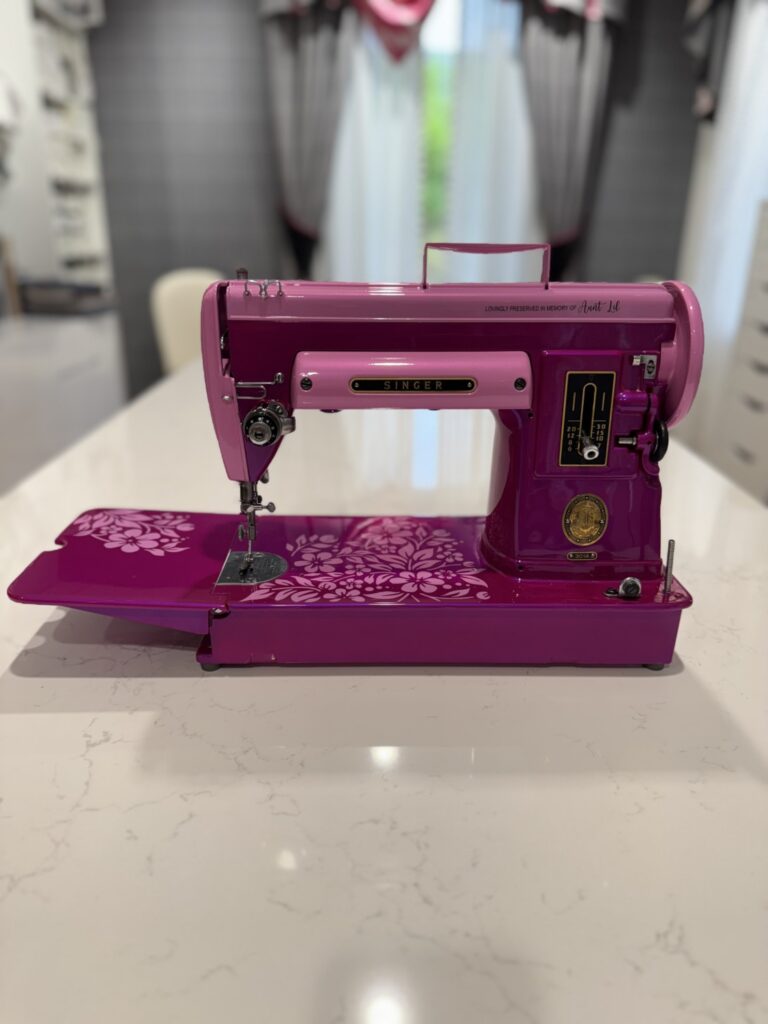
When Singer introduced this model in the 1960s, Aunt Lil and her mother stood in line together to be among the first to buy it and she treasured this machine from the moment she brought it home.
You have to understand that sewing wasn’t her hobby. It was her way of life.
If someone needed something, Aunt Lil made it. Wedding dresses, baptismal gowns, draperies, gifts, home décor, you name it. She never seemed intimidated by what she didn’t know. She’d just figure it out.
Sewing was a part of who she was. That machine was just the vehicle.
That Singer sat beside her through every chapter of her life; allowing her to care for the people she loved in the way she knew best.
As sewing became a larger part of my own life, Aunt Lil and I grew closer. We could spend hours talking about projects, fabrics, machines, and business. Long before Stitch Above the Rest became what it is today, she was encouraging me and sharing wisdom from a lifetime of making things with her hands.
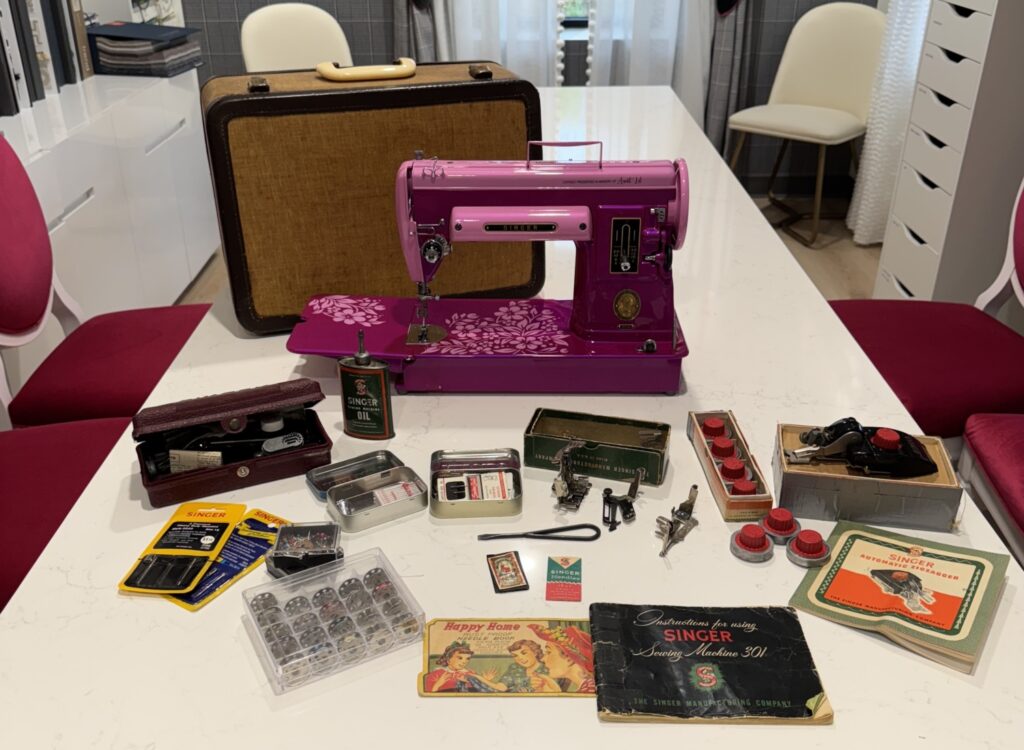
When Aunt Lil moved into a nursing home in her nineties, she took the machine with her. It was a prized possession of hers and she could not move without it. To her, it wasn’t just a sewing machine. It was a lifeline. When all other things were closing in on their final days, she knew she could still create things up until her final moments.
And create she did. Understanding the value of a dollar for hard work, she would make decorative pillows from clothing and sell them to her nursing home neighbors. It gave her purpose and something to focus on, while also putting a few bucks in her pocket for the grandkids.
So, one day while sitting across from her in that nursing home, she told me that no one in her family wanted her prized possession. I could hear the sadness in her voice. Before she could say another word, I told her I’d love to have it. She lit up. Almost instantly, her sadness turned to relief.
From that moment on, she was determined to make sure it found its way to me. She had one more thing she needed to do. A few days later she called me to explain she was putting it in her will for me to ensure I got it.
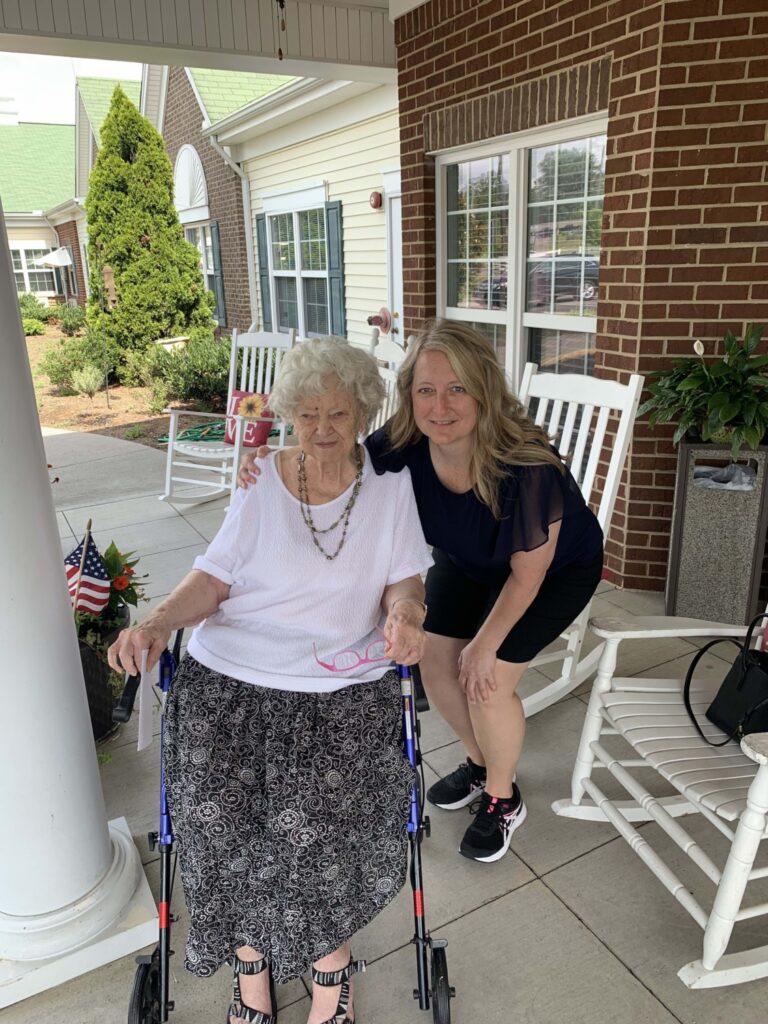
Looking back, I realize she wasn’t simply giving me a sewing machine. She was entrusting me with something she loved. In some ways, it felt like she was handing me the reins to her kingdom.
She may not have been able to articulate verbally what that machine meant to her, but she knew she wanted to ensure its safety after she was gone.
After she passed away, her son and I met off an interstate exit somewhere between GA and TN to exchange it. Years later, I had it restored in her honor to the color you see today. Painted in two shades of pink with hand-drawn lilies and the words, “Lovingly Preserved in Memory of Aunt Lil.”
This machine wasn’t just being restored. It was beginning another chapter. Today, it still runs as beautifully as it did decades ago, and I still use it. Sometimes I even take it on jobs where I might need it onsite. Every time I hear it running, I know a little piece of Aunt Lil is still creating.
Because this story was never really about a sewing machine. It’s about a woman who poured herself into everything she made and cared enough at the end of her life to make sure that part of her story would continue after she was gone.
I hope she’d be proud to know that it has.
 The Machines Behind the Work: First Stitches