
How we engineered a custom Roman shade that no one else was willing to build.
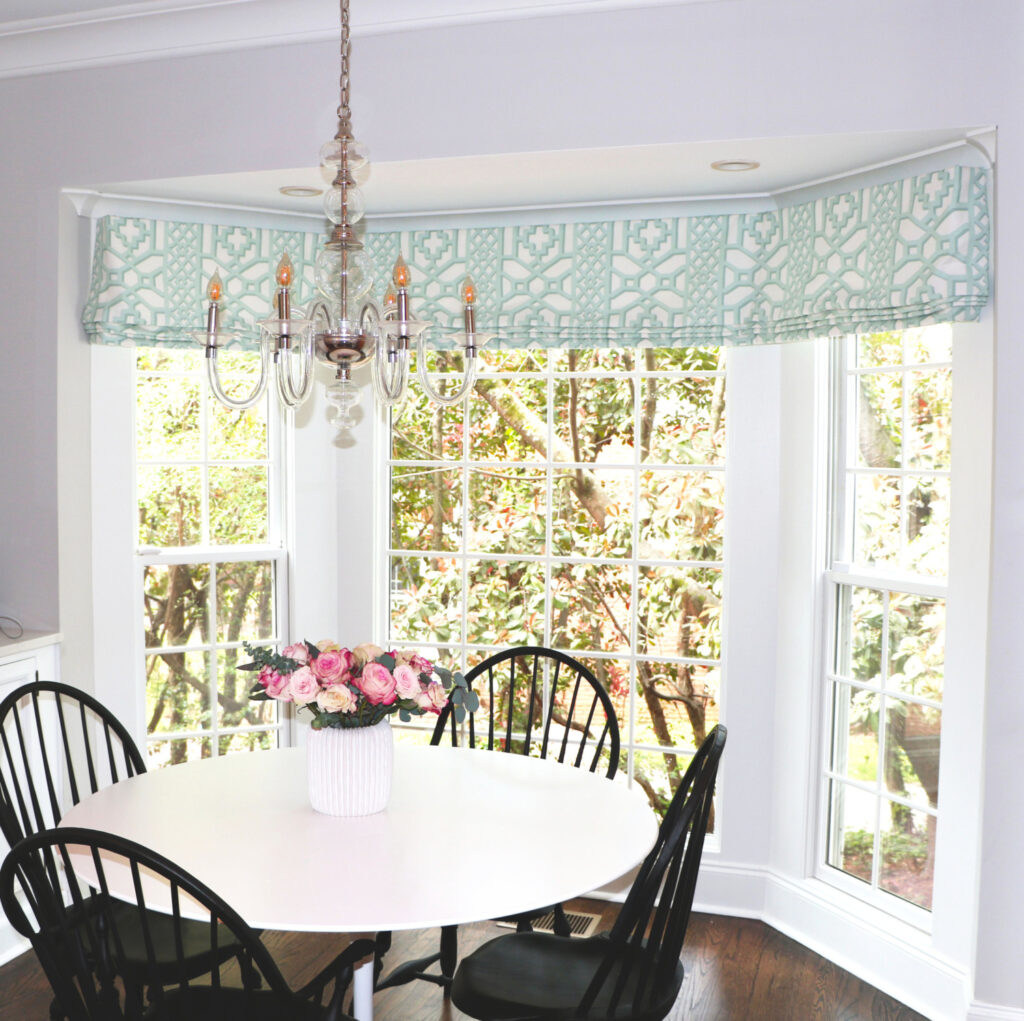
The word “custom” gets used a lot in this industry. But there’s a difference between selecting from a set of options and actually engineering a solution from scratch.
This kitchen bay window is the latter, and it started with a client who simply needed the sun to stop winning. At Stitch Above the Rest, we work directly with homeowners and interior designers in Atlanta to solve problems that don’t have a standard answer.
The Problem With a Bay Window
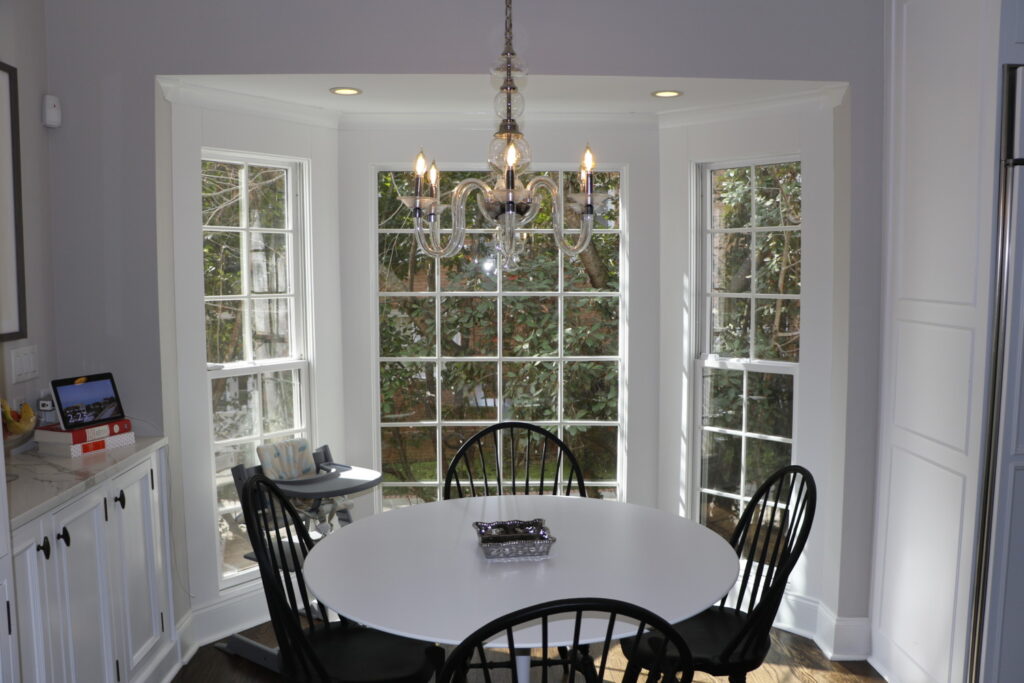
A bay window brings in beautiful light and adds architectural interest, but when real light control is needed, it quickly becomes a fabrication puzzle.
The standard approach is three separate shades, one for each section of the bay. It’s simple and works well enough, but it creates gaps where light comes through and reads as three separate elements instead of one cohesive treatment.
For this client, that wasn’t going to work. She needed to manage harsh sun that came in at specific times of day, without blocking the window entirely. And she wanted something that looked intentional, not pieced together.
One Continuous Shade Across the Entire Bay
We designed and fabricated a single Roman shade, with one piece of fabric and one operating system, that spans the full width of the bay. Not three shades that coordinate. One shade.
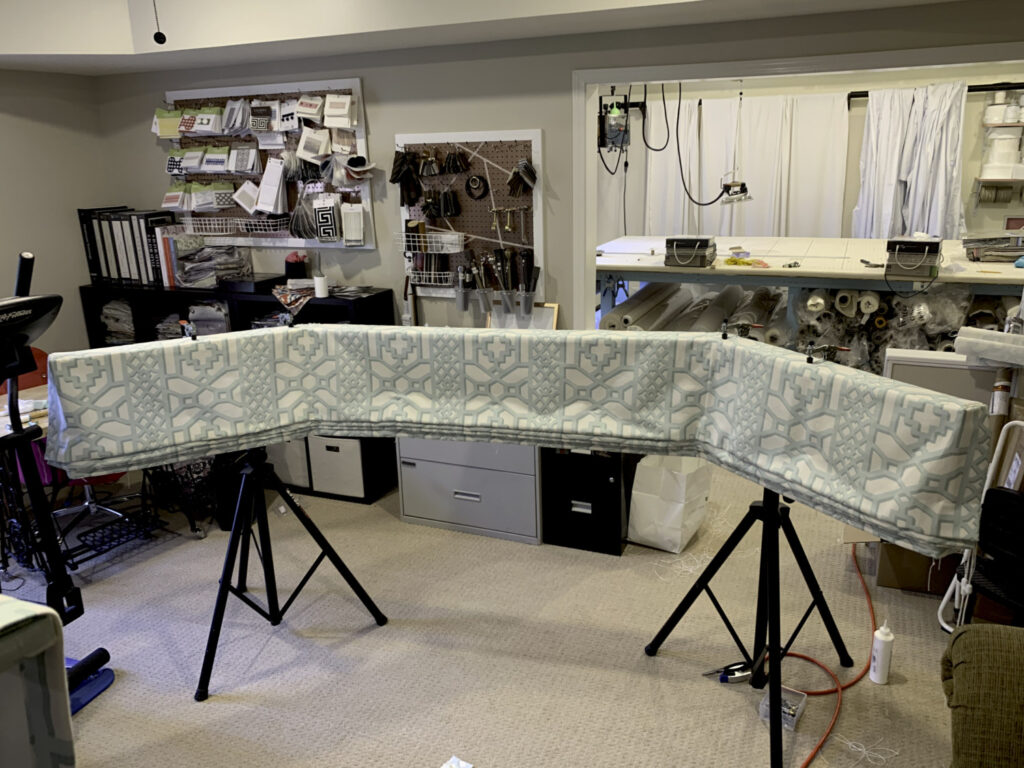
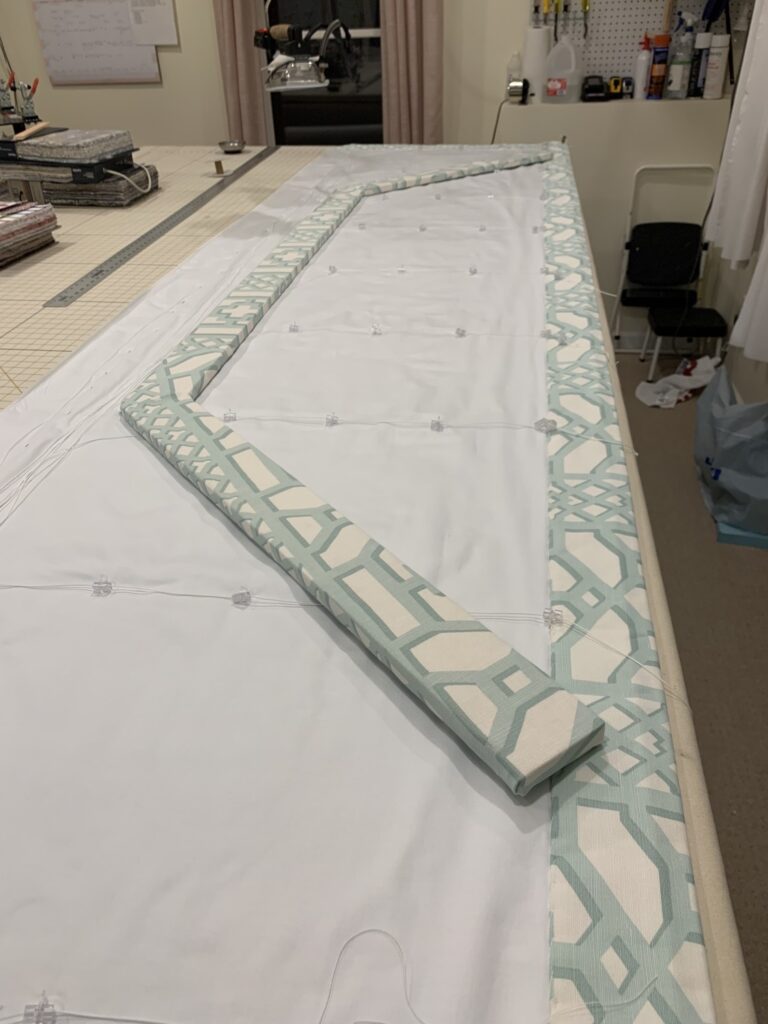
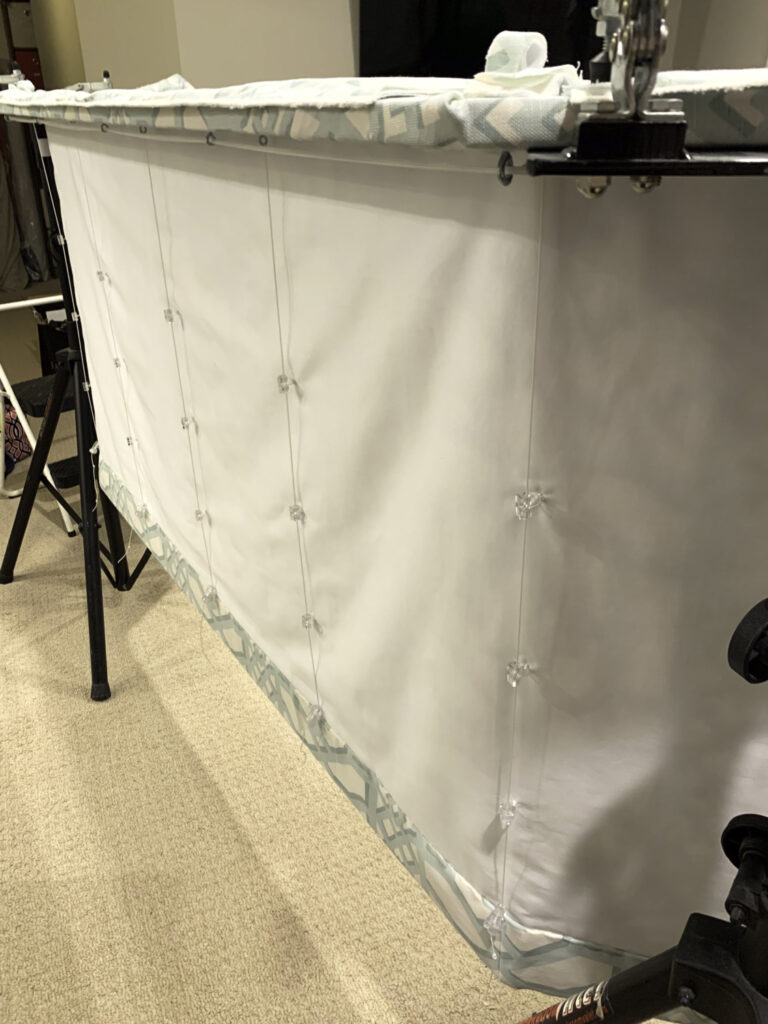
Custom-built boards, cut and adjusted to follow each angle of the bay, with just enough flexibility to ensure a clean fit on installation day.
To make that work, the board structure had to be custom-built to follow the exact angles of the window. But here, the bay angles weren’t identical on each side. So rather than force a hard miter that would leave no room for error on install day, we clipped the corners where the boards meet. The face fabric wraps over those corners with just enough give that we could make fractional adjustments during installation if needed. It’s a small detail, but it’s the kind of thing that makes the difference between a shade that installs cleanly and one that fights you at the end.
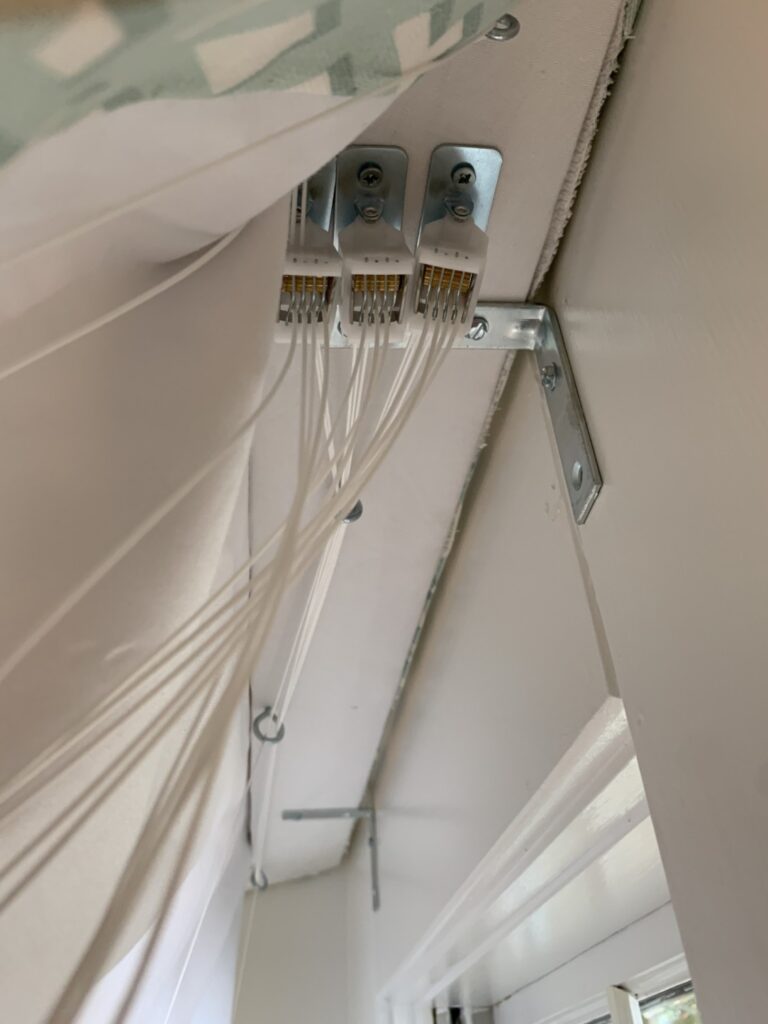
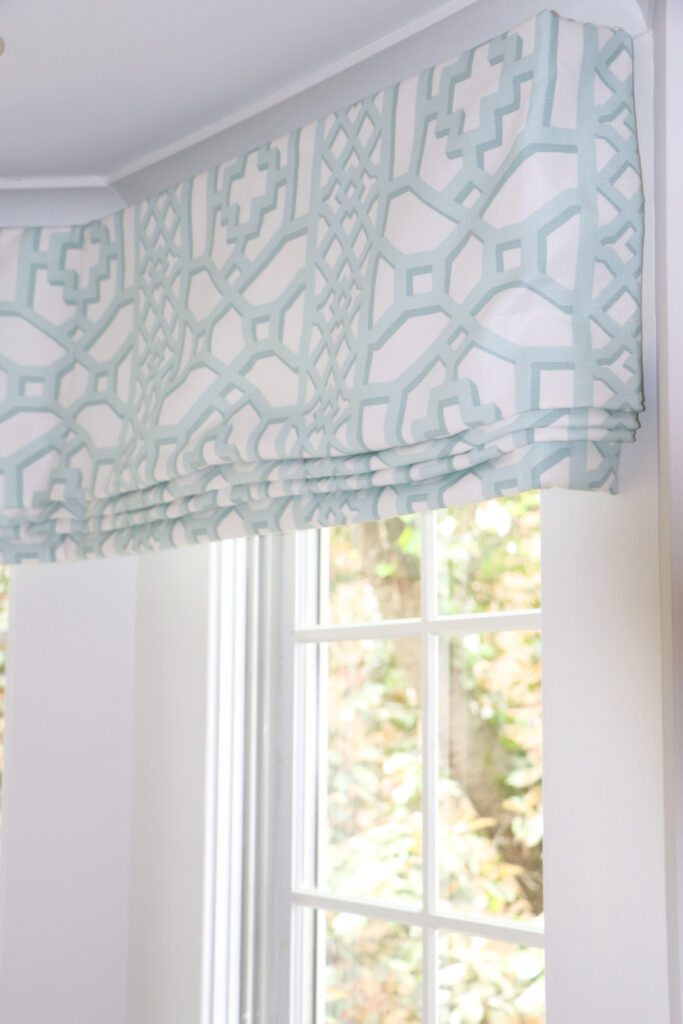
The board was mounted up to the crown using L-brackets, designed for on-site adjustment, which meant a clean, efficient install.
Engineered to Work as One Seamless Shade
Getting a single shade to operate evenly across three angled sections required a thoughtful approach behind the scenes.
We ran 11 columns of rings through the shade and threaded them through three cord locks, then joined those cords into one. The result is a smooth, unified operation, with just one pull to lower the shade when the sun is strong, and one motion to raise it back up for a clear view.
The structure had to work just as carefully.
A traditional weight bar runs straight across the bottom of a Roman shade, which works for a rectangular window but not for a bay. So we custom-cut the weight bar to match each section, then joined and enclosed it within the hem. This allows the shade to maintain a clean, even line while still following the angles of the window.
And instead of stopping at the front of the frame, the fabric returns all the way back to the wall on both sides as one continuous piece. This detail conceals the mechanics, eliminates side light gaps, and gives the entire treatment a finished, tailored look from every angle.
The Same Design, Proven on a Designer Project
Recently, I had the opportunity to bring this same concept to life in collaboration with Polished Home Interiors, a Charlotte-based interior design firm. What made this project especially meaningful was that it was done entirely from a distance. They trusted me with their client’s space based on my work, my website, and our conversations.
When I suggested this approach for their bay window, they were genuinely surprised—in the best way. They didn’t realize a solution like this even existed, and immediately said yes.
From there, it was a matter of adapting the engineering to fit a new space: different fabric, different measurements, same thoughtful construction behind the scenes.
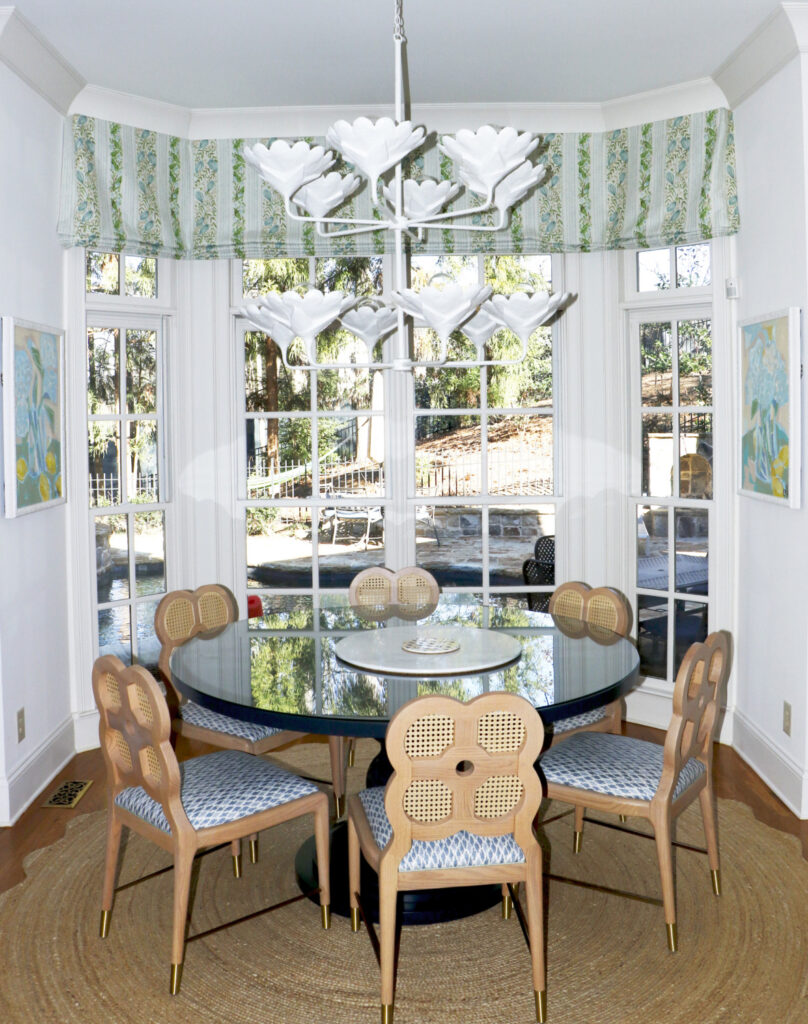
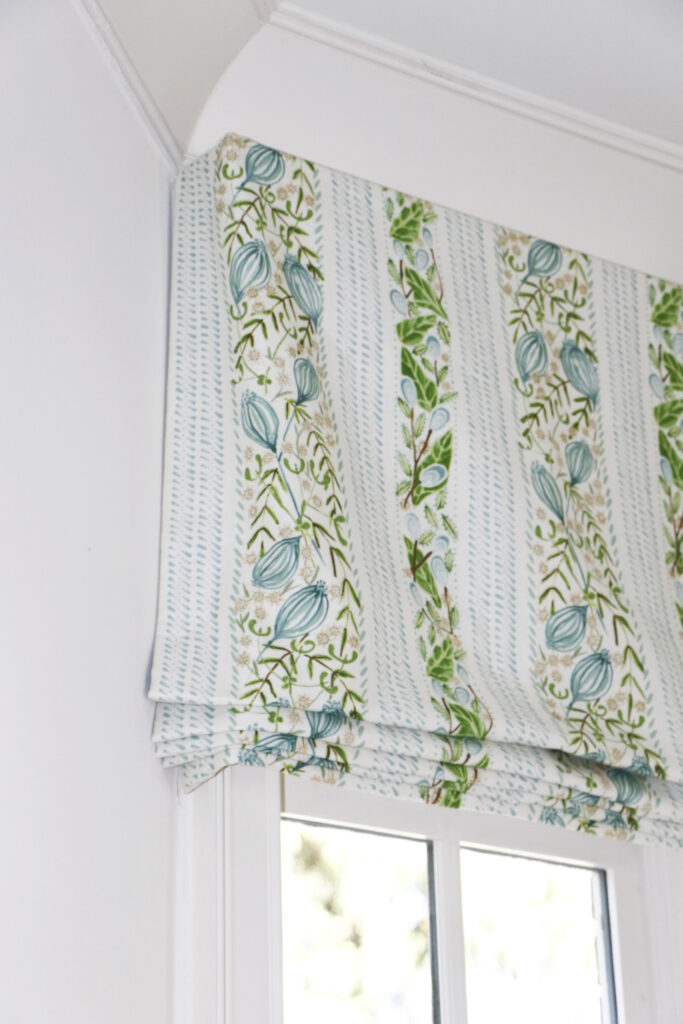
In this case, the client didn’t need the shade to operate, so once we set it at the perfect position during installation, we secured it permanently. The result was a fixed faux Roman shade with all the softness and visual impact of a functioning treatment, but without the need for mechanics.
After completing the project, we shared a reel on Instagram that has now reached over 108,000 views. The response has been incredible, with designers, workrooms, and homeowners all reaching out, curious about how it was done.
That kind of traction doesn’t happen by accident. It comes from offering a creative, well-crafted solution that people haven’t seen before, and one that solves a design challenge in a beautifully simple way.
A Space That’s Already Had Its Close-Up
One more note on this kitchen: it’s been on the big screen. Several scenes from Scream 7 were filmed in this home, which means the space has had its share of scrutiny from directors, cinematographers, and audiences. We didn’t design the treatment for a film set, but the same standard applies. The work needs to hold up from every angle, under every light, at every distance.
Why This Matters
This level of fabrication isn’t available through a standard workroom or a ready-made product line. It requires the ability to engineer custom board systems, problem-solve on-site, and make decisions that account for the specific geometry of a real window, not a template.
For Atlanta homeowners, it means a window treatment that actually functions the way you need it to and looks like it was always meant to be there. For Atlanta interior designers, it means a workroom partner who can take a complex window and figure out how to build it, and bring ideas to the table you may not have considered yet.
Every bay window is a puzzle. I just happen to like solving puzzles.
Next up: I’ll be sharing the master bedroom from this same project, a similar continuous cornice across a second bay window, layered Roman shades, and drapery panels that bring the whole room together. Stay tuned.
Ready to talk through your next project? I’d love to hear what you’re working on. Schedule a consultation.
 A 30,000-Square-Foot Drapery Project That Pushed Every Limit